Weekly: Signs of a Bottoming Process
MAR 2, 2026
Crypto is showing early signs of a basing phase. After 5 down weeks, market cap just turned green. Exhaustion signals are building across BTC/ETH/SOL, sentiment remains washed out, and correlated markets are stabilising. Not confirmed yet — but the setup is improving.
Telegram took another meaningful step into crypto-native financial services, and Re7 Labs is part of the rollout alongside partners TON, Morpho, and TAC. The messaging giant’s built-in wallet has launched yield on user holdings of BTC, ETH, and USDT, with Re7 Labs supporting yield opportunities of up to 18%. This marks a significant expansion of passive income opportunities directly inside one of the world’s largest social platforms. Read the full article.
In case you missed it
Our founder Evgeny Gokhberg joined Raoul Pal on Inside a DeFi Hedge Fund to discuss the thinking behind our market-neutral yield strategies, including smart contract risk oversight and multi-chain capital allocation. Watch the full conversation on YouTube or stream it on Spotify.
Market Overview
Last week, we discussed the complex and contradictory market signals shared by analysts and investors.
This week, we run through the state of the market as we see it today and how to navigate this noise on a probability basis.
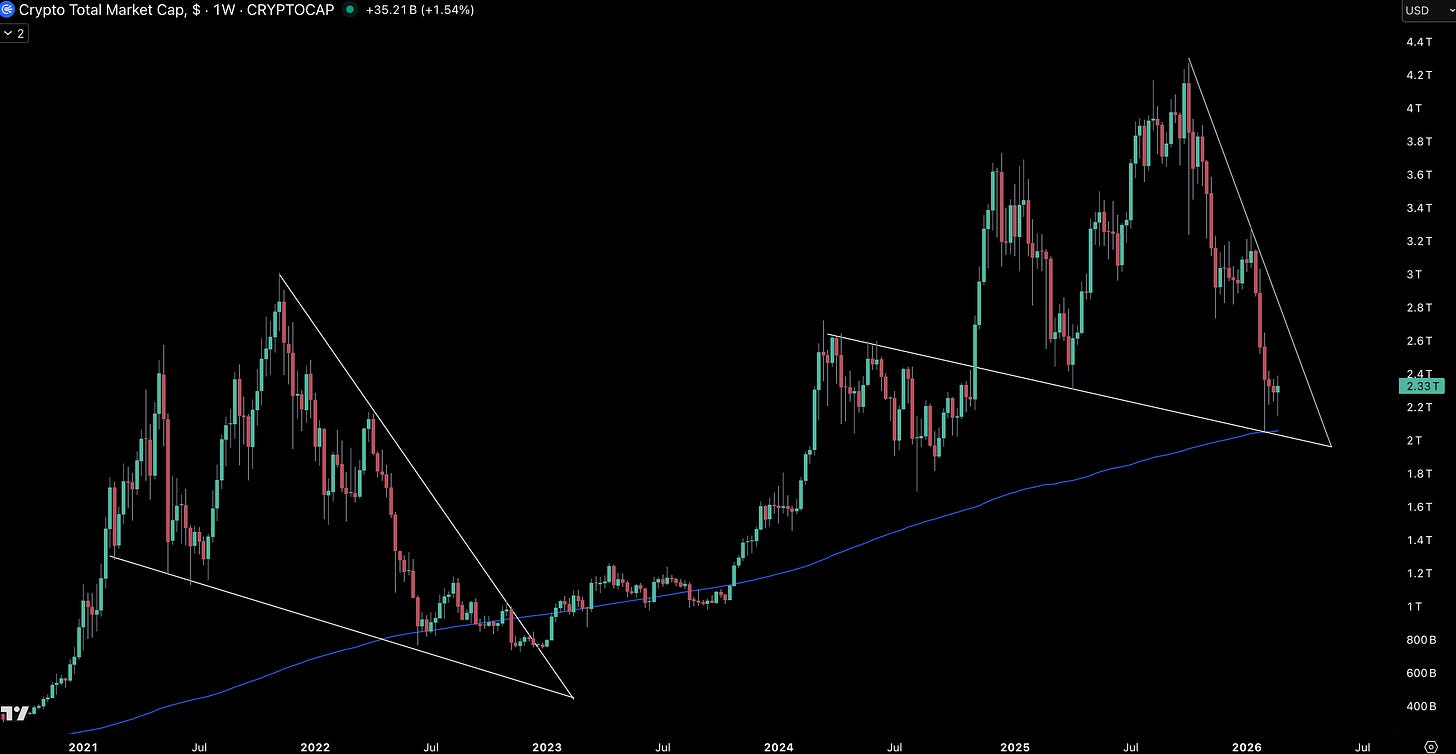
Crypto has printed its first positive week after five consecutive drawdowns, stabilising ~$2.3T, sparking the idea that basing could be at play.
Still Looking for Direction Short-Term
Momentum last week was primarily driven by rotation back into tech, particularly software and flawed market-maker narratives reinforcing direction of travel.
BTC continues to set the agenda for the rest of the crypto market as it so famously does. Right now, BTC is held within a clear wedge formation, reflecting low conviction among investors.
Fear & Greed remain at record lows (5/100 last week) illustrates this.
One of the things to be looking for is a convincing upside break from this wedge like we saw in 2022.
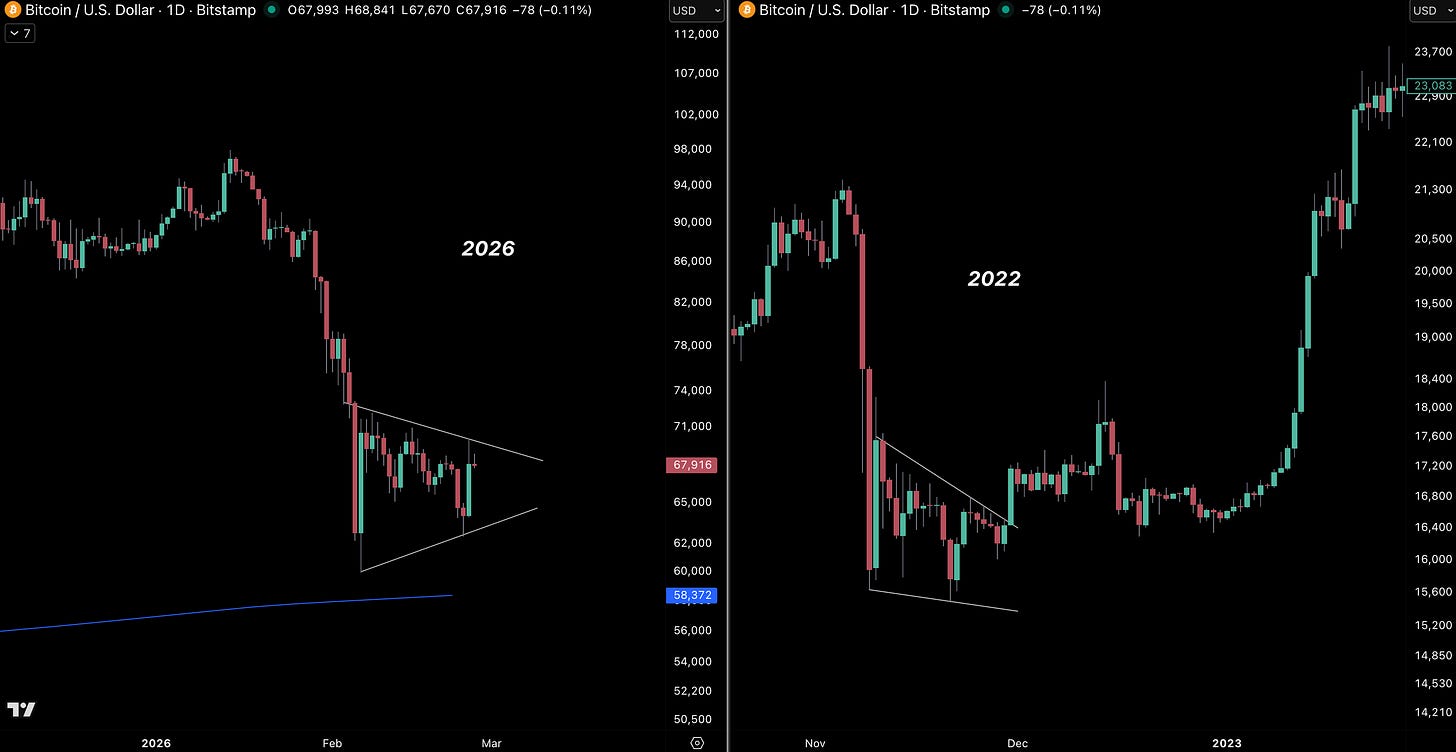
Failing that, BTC can chop around for several weeks and make marginal lower lows - a pattern that has happened twice already since 2022.
Weekly Exhaustion Count Building: Three Week Window
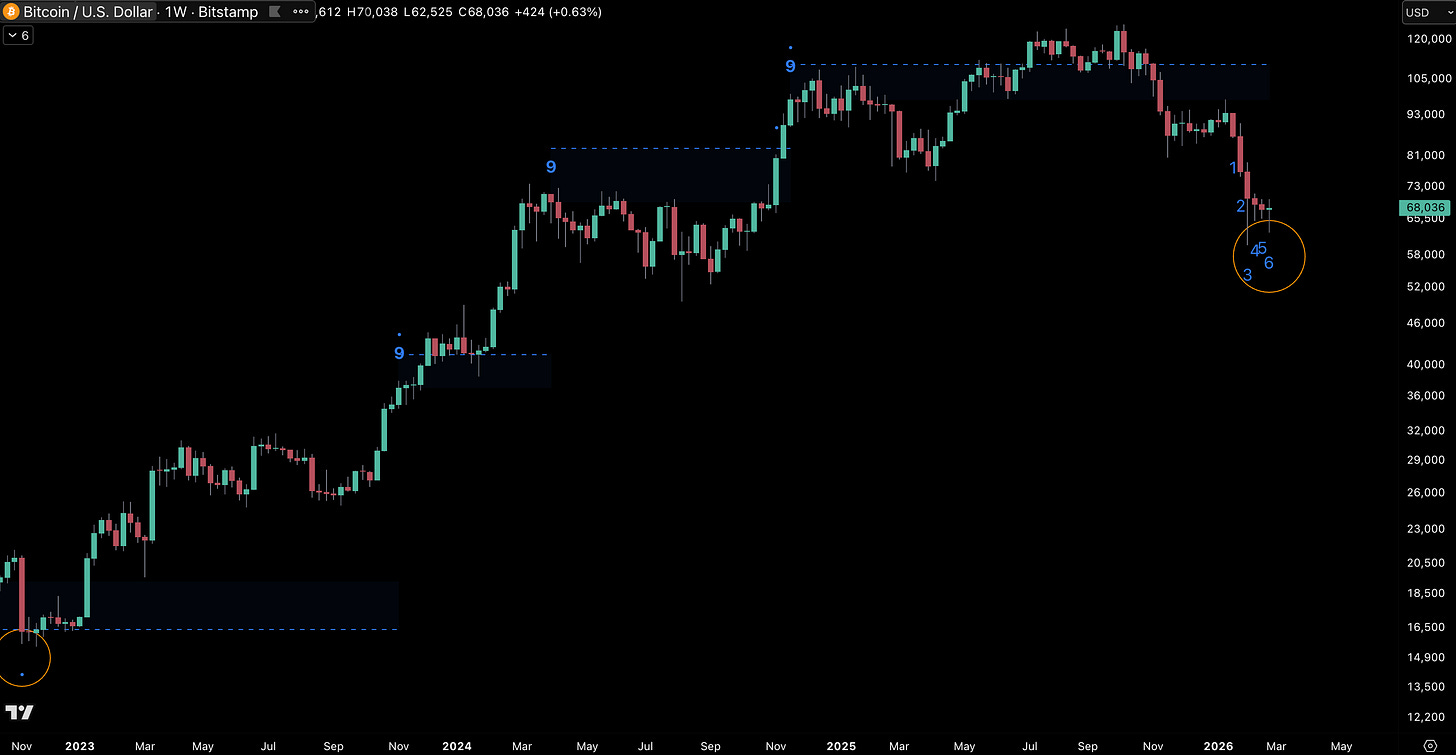
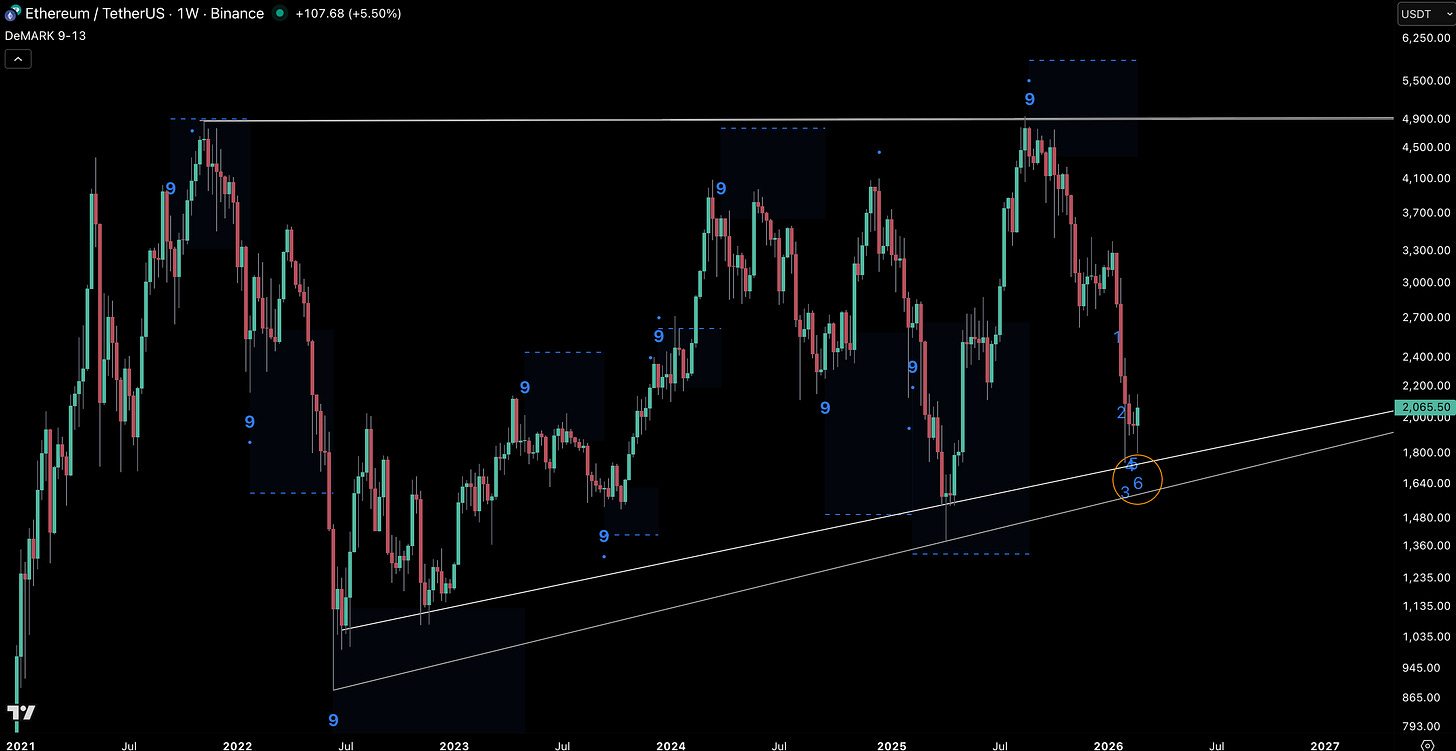
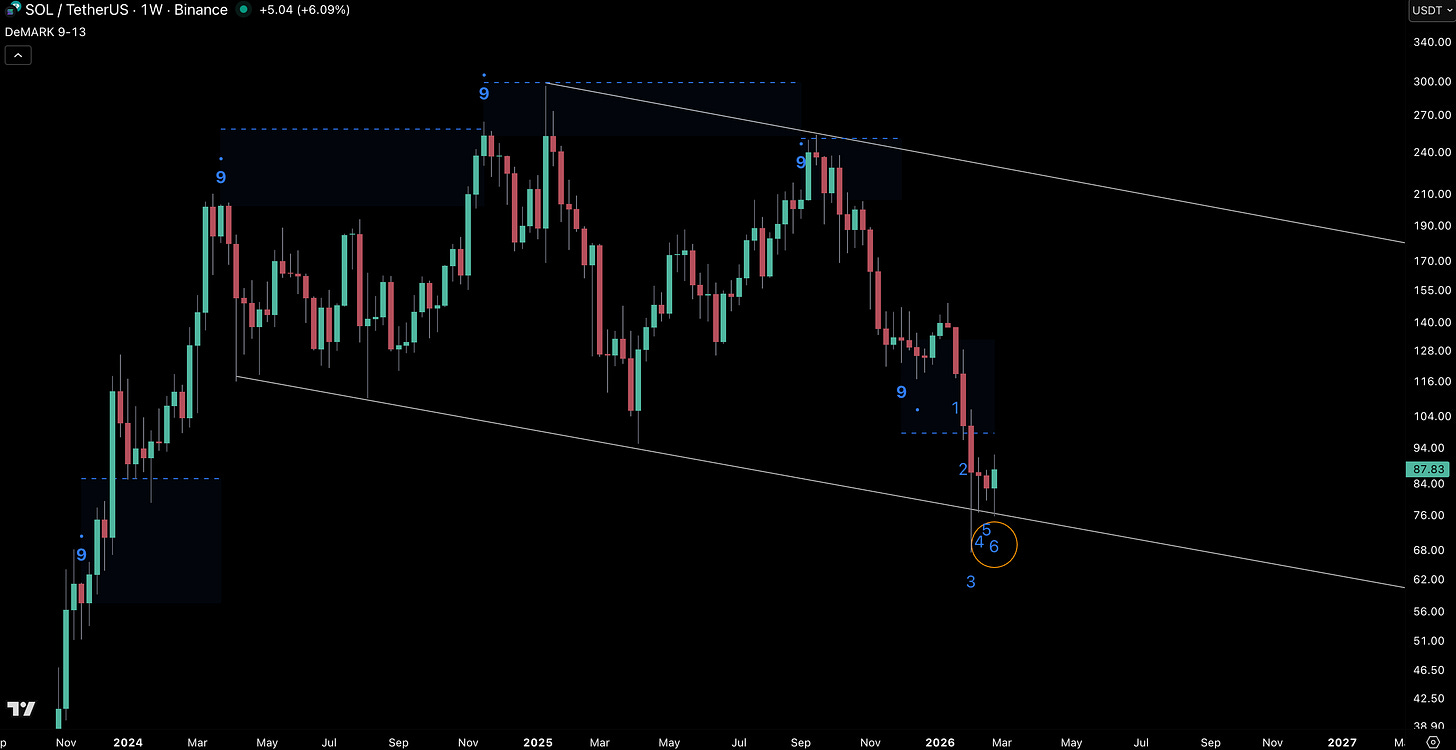
Three weeks appears to be a key window. BTC DeMark count is at 6 out of 9. The last perfected buy 9 count was November 2022.
ETH/USD is also showing DeMark 6 on the weekly…
and SOL/USD too…
Correlated Markets Are Basing
Markets that crypto remains correlated with are also finding their floor.
We’ve got DeMark Sequential 9 for software indices like IGV last week. The release of the Citrini “doomsday” research marked the exact local low.
Investors often forget that bottoms are formed from bad news, not good news. The July 2021 China crypto mining ban and FTX collapse in November 2022 were no exceptions.
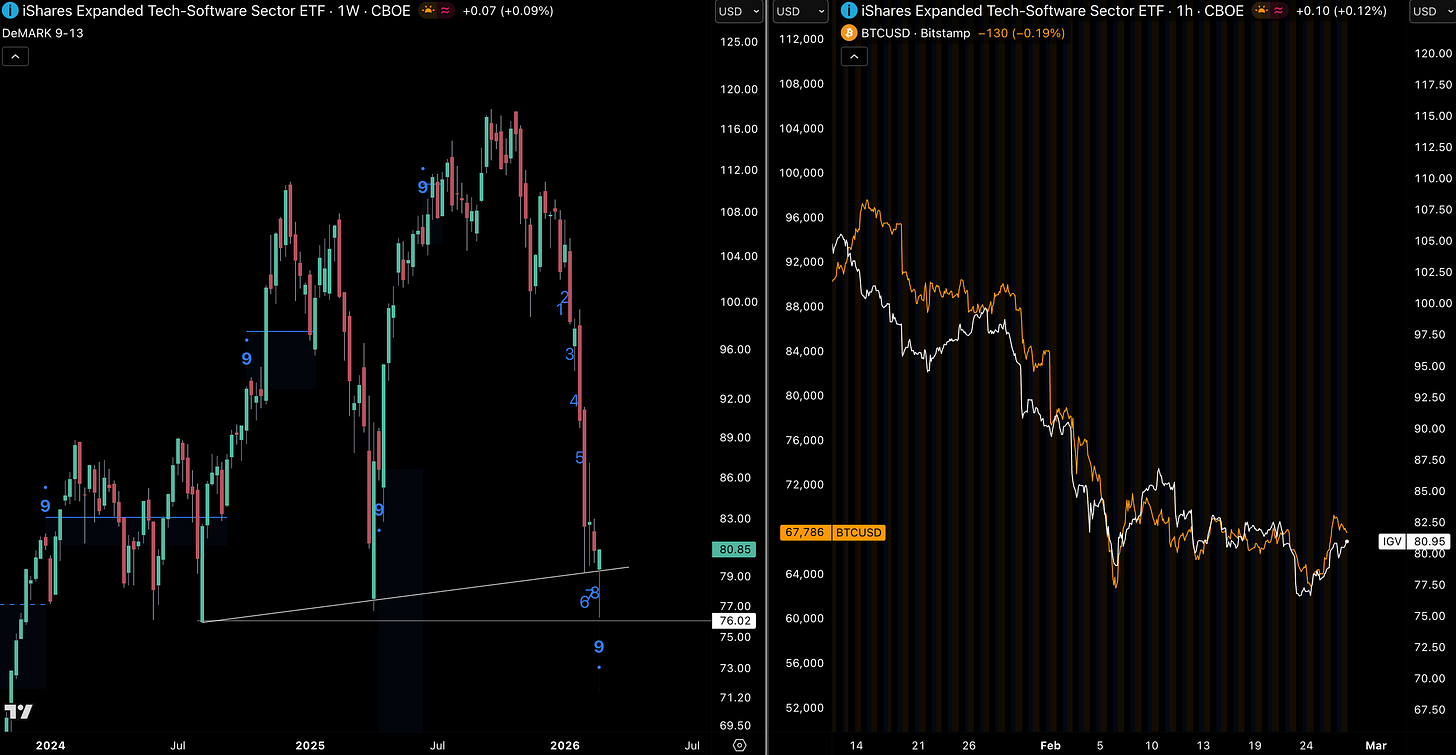
IGV Weekly (left). BTC vs. IGV (right).
The buy print doesn’t necessarily guarantee a low, but it does reinforce the feeling that the market is transitioning from trend to basing.
This can have implications for crypto assuming their correlations remain largely positive.
Bottoming vs. Gold
Elsewhere, BTC/Gold is showing seller exhaustion and a basing pattern at the 2023 lows.
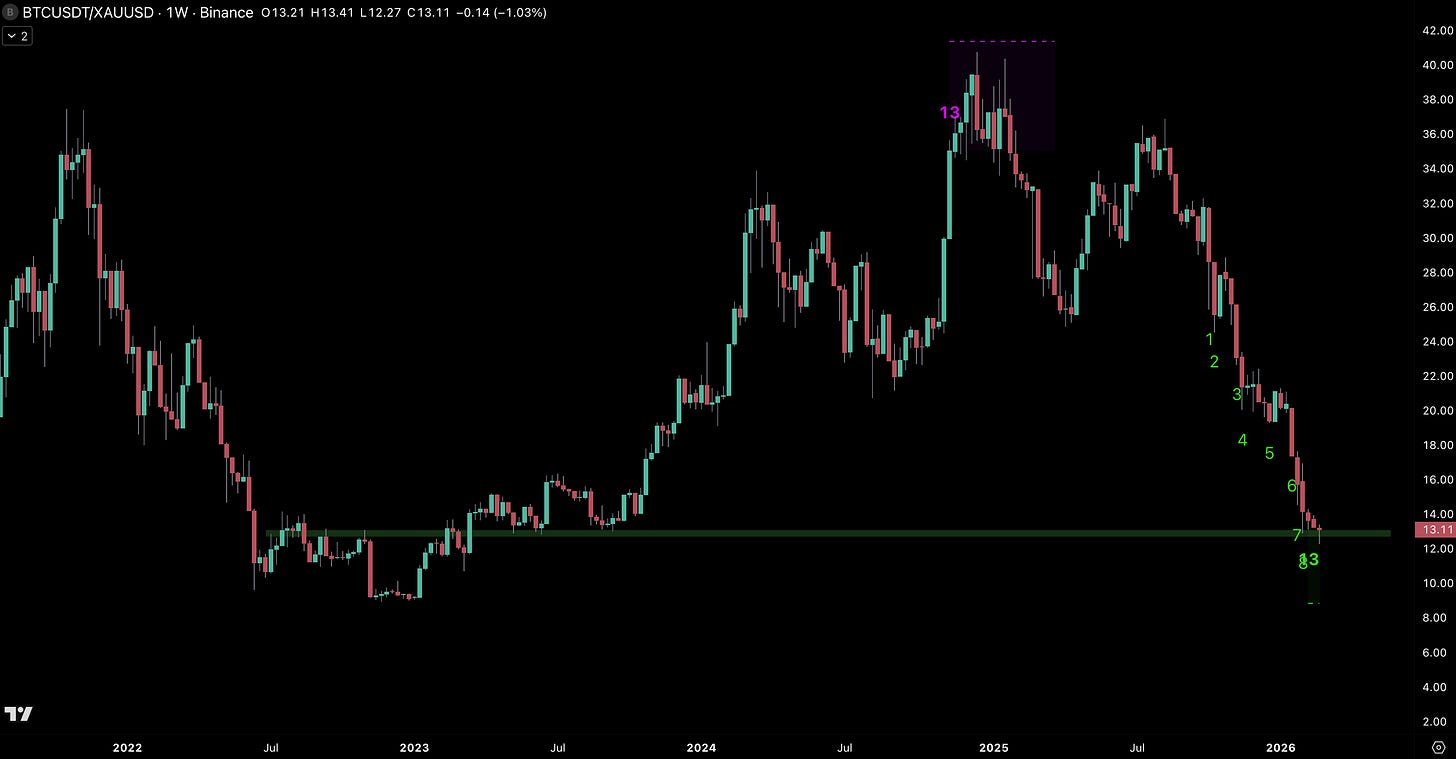
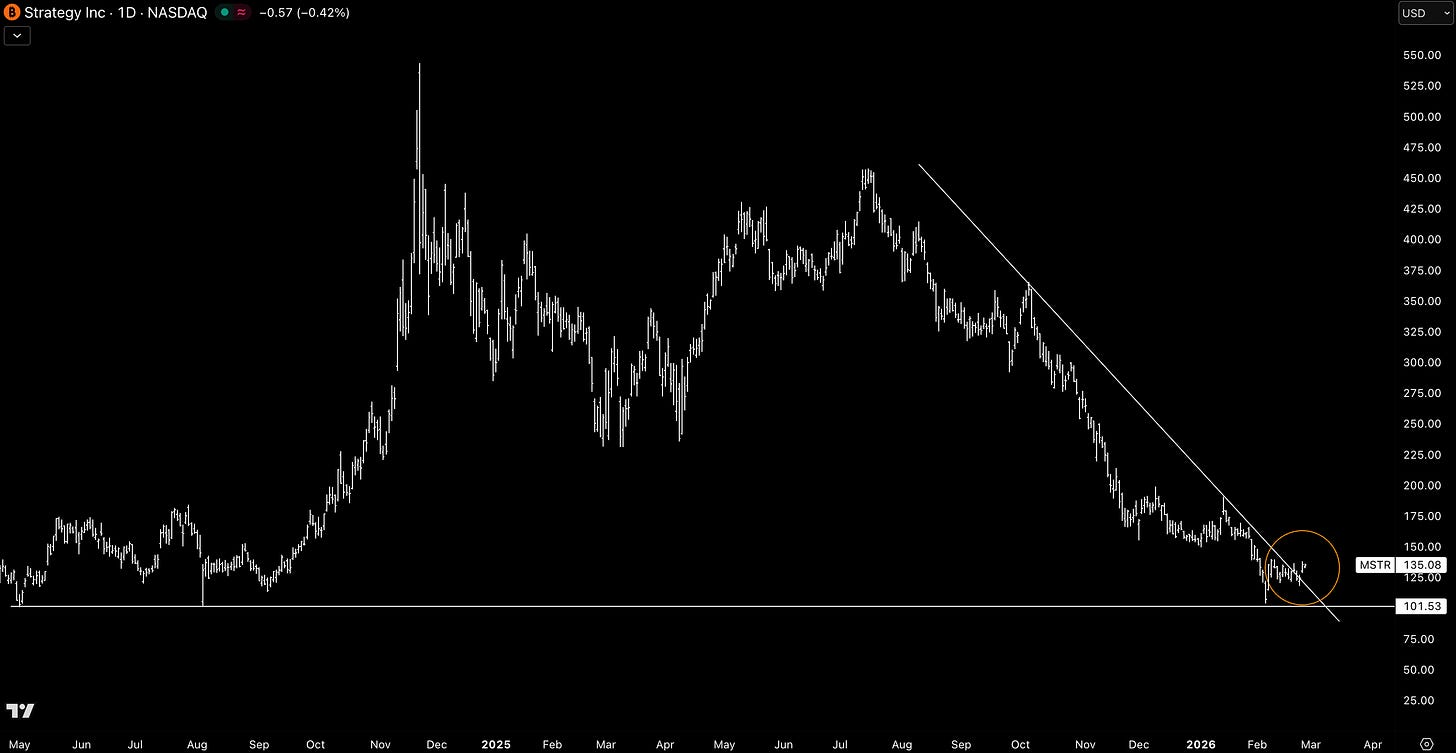
Strategy is starting to break its downtrend from summer 2025 in what could be an early sign of the direction—although still dependent on what BTC does over the coming weeks.
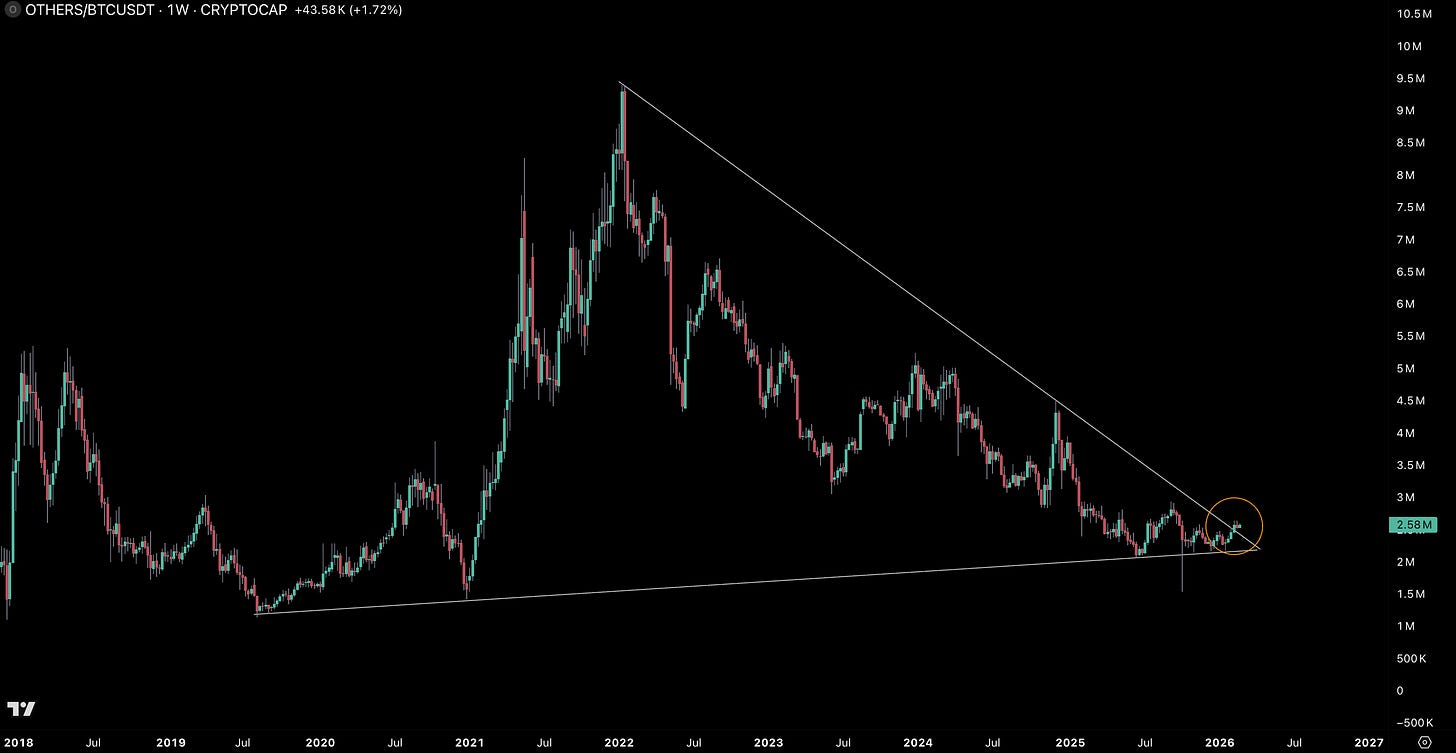
The alt market/BTC ratio is now poking its head out of its six-year wedge.
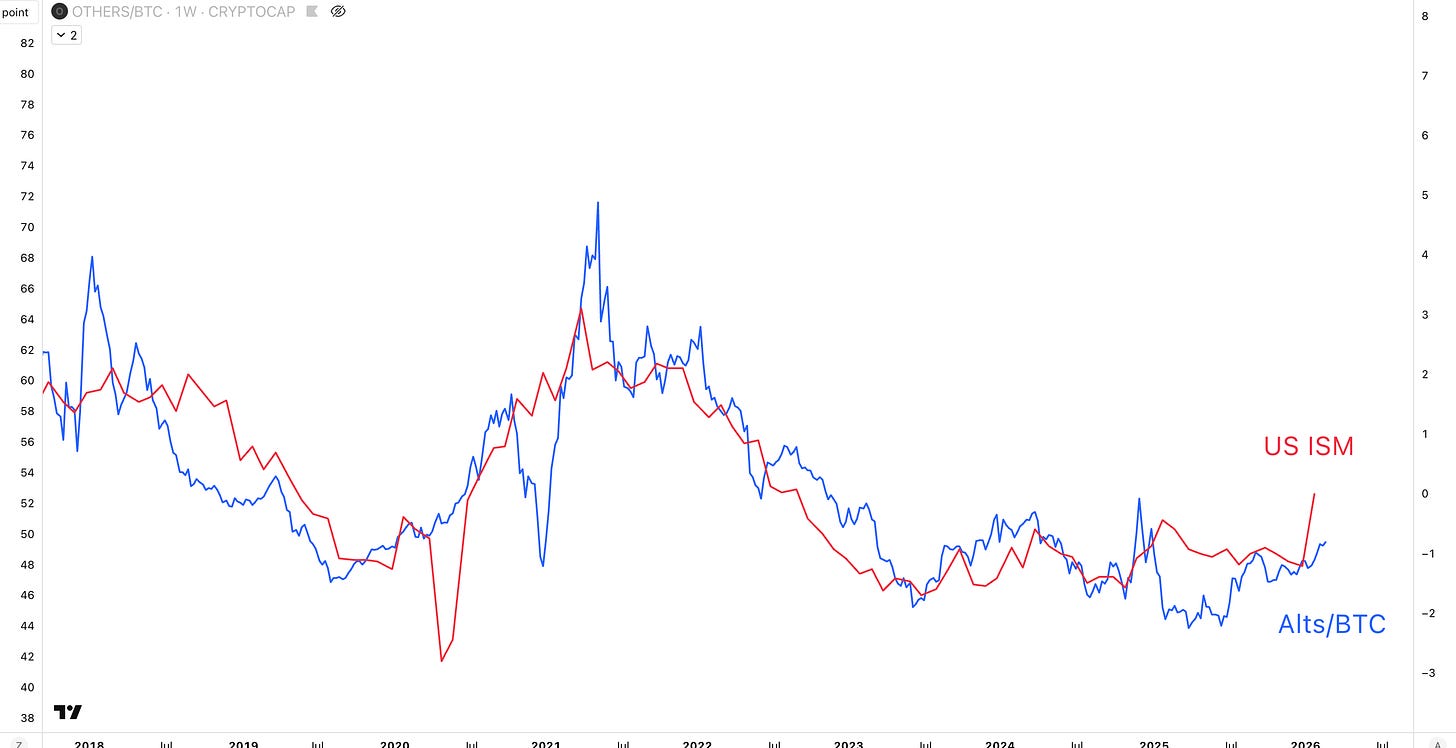
As we’ve mentioned before, this was a more likely outcome given we’re seeing acceleration in economic growth, including the US.
Investors are also becoming more bearishly positioned. A non-consensus view would be a tech melt up into late Q1 with clear invalidation levels.
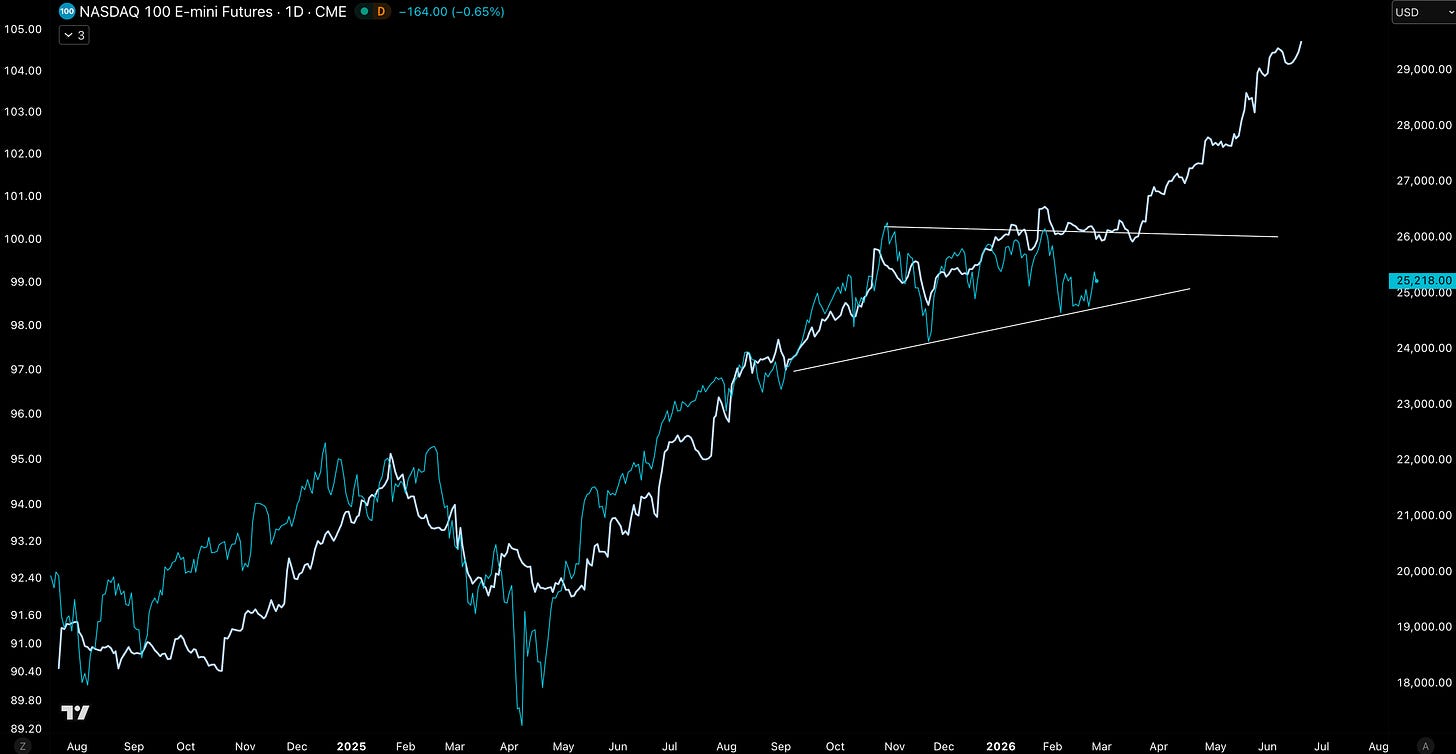
NASDAQ vs. global net liquidity (12 week lead).
Yields are falling in a midterm year, signalling a potential shift toward a productivity-led disinflation regime (i.e. not slowing growth). This is because we’re seeing:
productivity metrics rising
economic growth accelerating
strong corporate capex
tech investment surge
earnings revisions positive
risk assets strong
If this regime holds, it supports growth and long-duration assets — which has clear implications for crypto.
BTC, high-beta tech, and the broader alt complex tend to perform when liquidity conditions ease alongside improving growth expectations.
In that context, the basing patterns and exhaustion signals discussed above would align with a macro backdrop turning incrementally constructive, rather than defensive.
While concerns around labour displacement and uneven income effects are often cited, they appear overstated for the foreseeable future based on current data and are unlikely to disrupt the broader liquidity impulse.
Finally, this is why looking at previous midterm year performance may be a red herring.
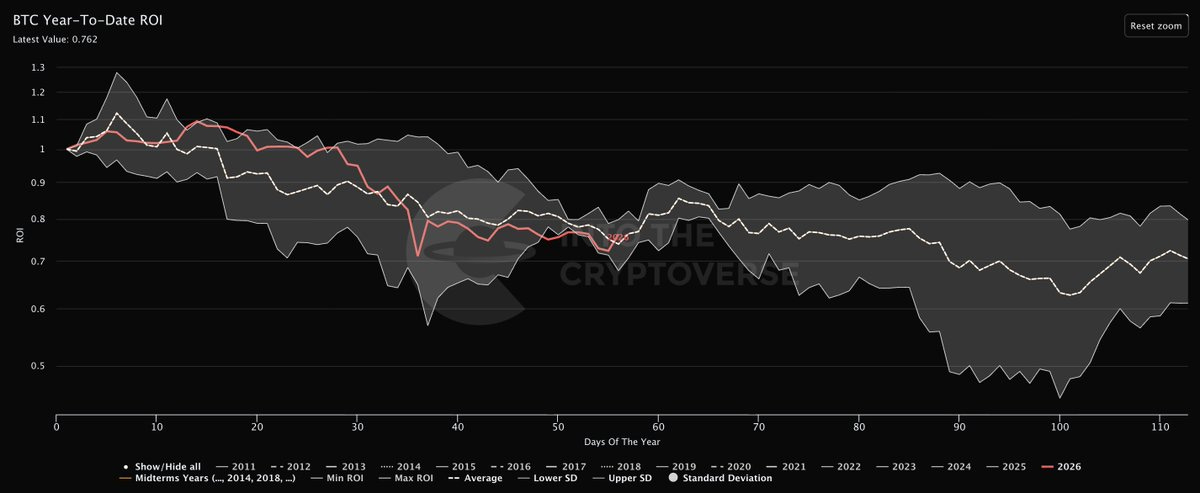
BTC YTD ROI current year (red) vs. average ROI for midterm years.
In recent cases when BTC was priced as a growth asset (2018, 2022), we were in a rate hiking cycle while US domestic and global net liquidity were declining in unison.
Fast forward to today, there is an incentive to maintain stable US domestic liquidity conditions into a midterm year.
With elevated debt levels and high sensitivity to financial conditions, sustained tightening in SOFR, repo rates, or broader bank liquidity conditions appears less likely.
If the potential liquidity drain is capped, downside pressure on liquidity-sensitive assets may also be limited.
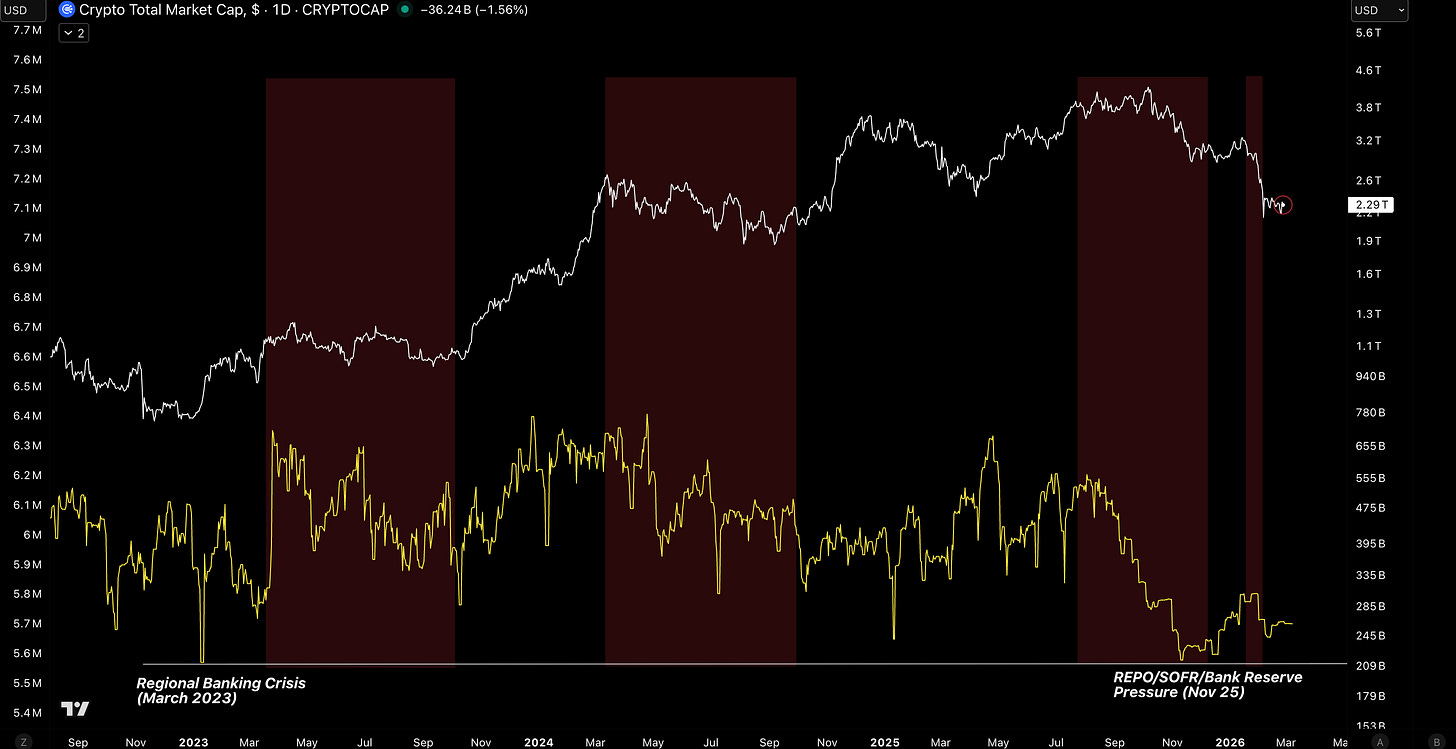
Global crypto market capitalisation vs. US Domestic Liquidity. Growth assets like crypto or software struggle most when narrow liquidity tightens in the US.
Given crypto’s role as a high-beta growth asset, this suggests downside risk could be similarly capped, particularly as basing signals emerge across correlated risk assets.
Disclaimers
The content is for informational purposes only. None of the content is meant to be investment advice. Use your own discretion and independent decision regarding investments. The opinions expressed in all Re7 public research articles are the independent opinions of the authors at the time of publication and not the opinions of the affiliates of Re7.
Please see here for full disclaimers.