The Weekly: The Binance Hack and What Comes Next
NOV 2, 2026
The $6.3bn Binance exploit was the largest crypto hack on record, but its market impact has been far more contained than the headlines suggest. With $2.8bn frozen by Circle and Tether and 95% of affected funds replenished, the response shows how far on-chain infrastructure has matured. This week we look at how crypto beta and alts held up against US tech, why Bitcoin is likely to trade between its 50-week MA and $80k, and how the largest hedge fund de-risking in a decade, falling US 10-year yields and the US midterms could set up renewed risk appetite.

New Institutional Report, written in collaboration with Clear Street. Institutional DeFi needs a common language for risk. Led by Re7 Founder and CIO Evgeny Gokhberg and built on our own methodology, A Framework for Decomposing DeFi Risk in the Age of AI breaks exposure into chain, protocol and asset layers and explores how AI is reshaping risk monitoring.
Evgeny Gokhberg joined 1000x Podcast: What It’s Like Running A Billion-Dollar Market-Neutral Fund In Crypto.
Bringing corporate treasury on-chain: a conversation with Yuval Rooz on Crypto Minutes, Bloomberg TV.
Re7’s Founder & CIO Evgeny Gokhberg hosts a conversation with Yuval Rooz, Co-Founder and CEO of Digital Asset, the company behind Canton Network, on the next phase of finance moving on-chain.
For Yuval, RWAs have always been the most compelling use case on-chain, and corporate treasury is where that becomes real:
“You’re going to start seeing corporates on Canton very soon using yield products that can be liquidated in real time into tokenized deposits or stablecoins. They’ll start doing treasury management using on-chain finance.”
Watch the full episode here.
We are hiring!
Senior Legal Counsel - Apply here.
Crypto Fund Operations Manager - Apply here.
Analyst, Investor Relations & Marketing - Apply here.
Re7 Labs
Re7 Labs has launched a Frax USDai Ecosystem Vault on Mainnet with Frax Finance and USD.AI, deploying frxUSD across curated opportunities in the USDai ecosystem.

Weekly Summary
We cover:
Why the $6.3bn Binance exploit has had a surprisingly limited impact on markets.
Crypto sentiment resetting as Bitcoin holds key technical support.
Improving cross-asset conditions ahead of the US midterms, potentially setting up renewed risk appetite.
The Binance Hack and What Comes Next
Binance Hack: Putting the Headlines Into Perspective
Last week’s $6.3bn Binance exploit was the largest crypto hack on record, but we think the headline figure materially overstates the damage.
Approximately $2.8bn in stolen assets were rapidly frozen by Circle, Tether and other issuers, while Binance has reportedly replenished 95% of affected funds through its own reserves and insurance fund.
The speed of the response demonstrates how the industry’s capabilities have matured, with transparent onchain infrastructure enabling stolen assets to be frozen and traced, materially containing the damage.
For perspective, the exploit represented just 3.7% of Binance’s $171bn in customer assets, with the ultimate economic loss considerably smaller.
More importantly, Sunday’s $3.6bn in net withdrawals represented just 2.1% of customer assets, suggesting that even the largest hack in crypto history has failed to trigger a meaningful run on the exchange.
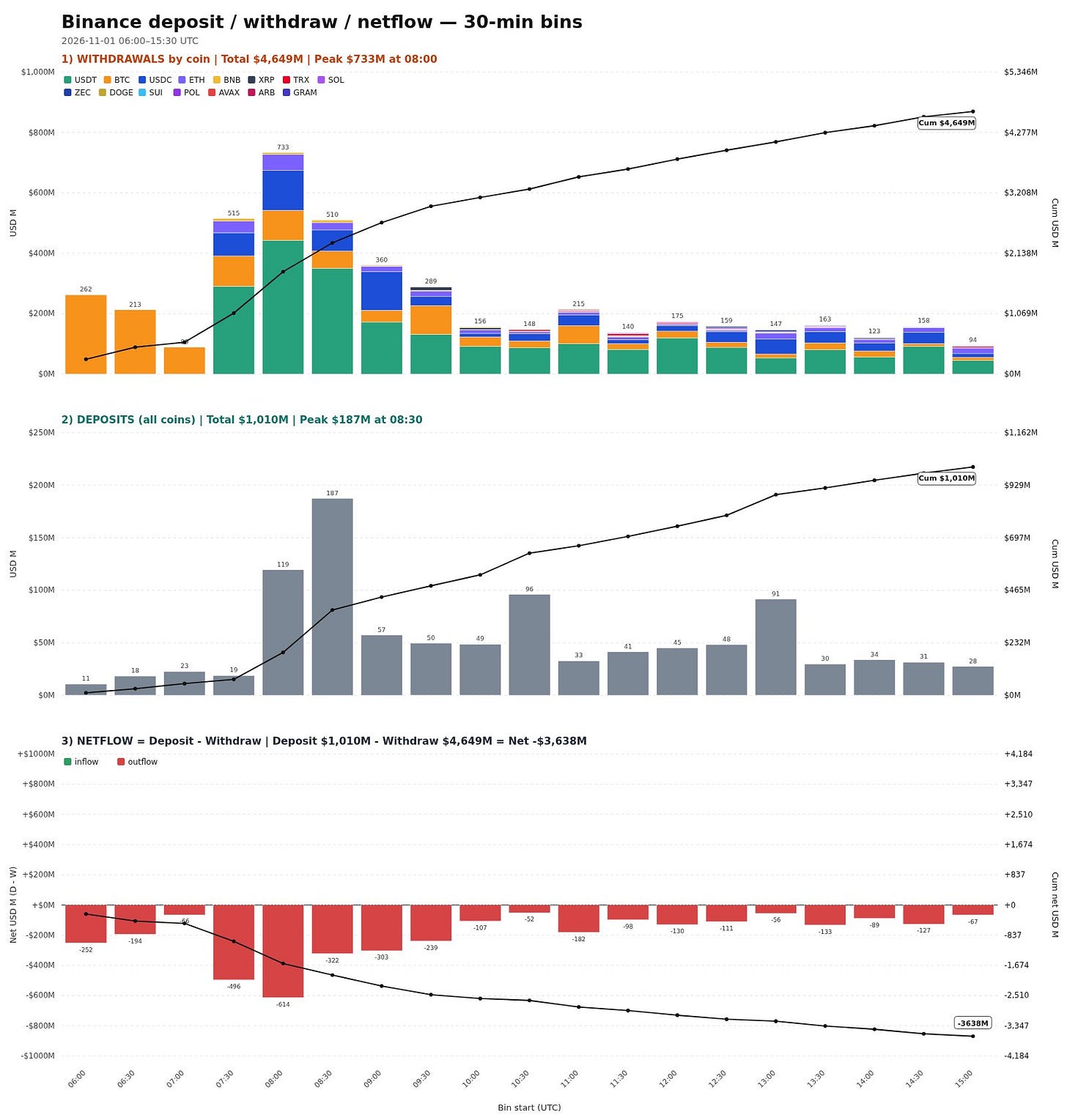
Binance customer assets and net flows following the $6.3bn exploit.
Ultimately, the economic and market impact looks far less consequential than the headlines suggest.
We also think it is misguided to frame this as evidence of crypto’s inherent insecurity. The attack reportedly originated from a compromised engineer’s laptop, an operational vulnerability that could just as easily affect a bank or major technology company.
Google suffered a corporate database breach in 2025, seven South Korean financial institutions were reportedly compromised in October, and Chinese hackers targeted US government-affiliated firewalls just last week.
Cyberattacks are a reality across every major industry, and there is little reason to hold crypto to a different standard.
The Impact on Markets
Since the exploit, crypto beta (white) and alts (pink) have underperformed, as expected.
However, despite a broader risk-off move, crypto beta underperformed US tech by less than 2%, while alts underperformed crypto beta by a further 2%.
Given the scale of the largest exploit in crypto history, a ~6% decline in alts is relatively moderate, particularly against an already weak backdrop for sentiment.
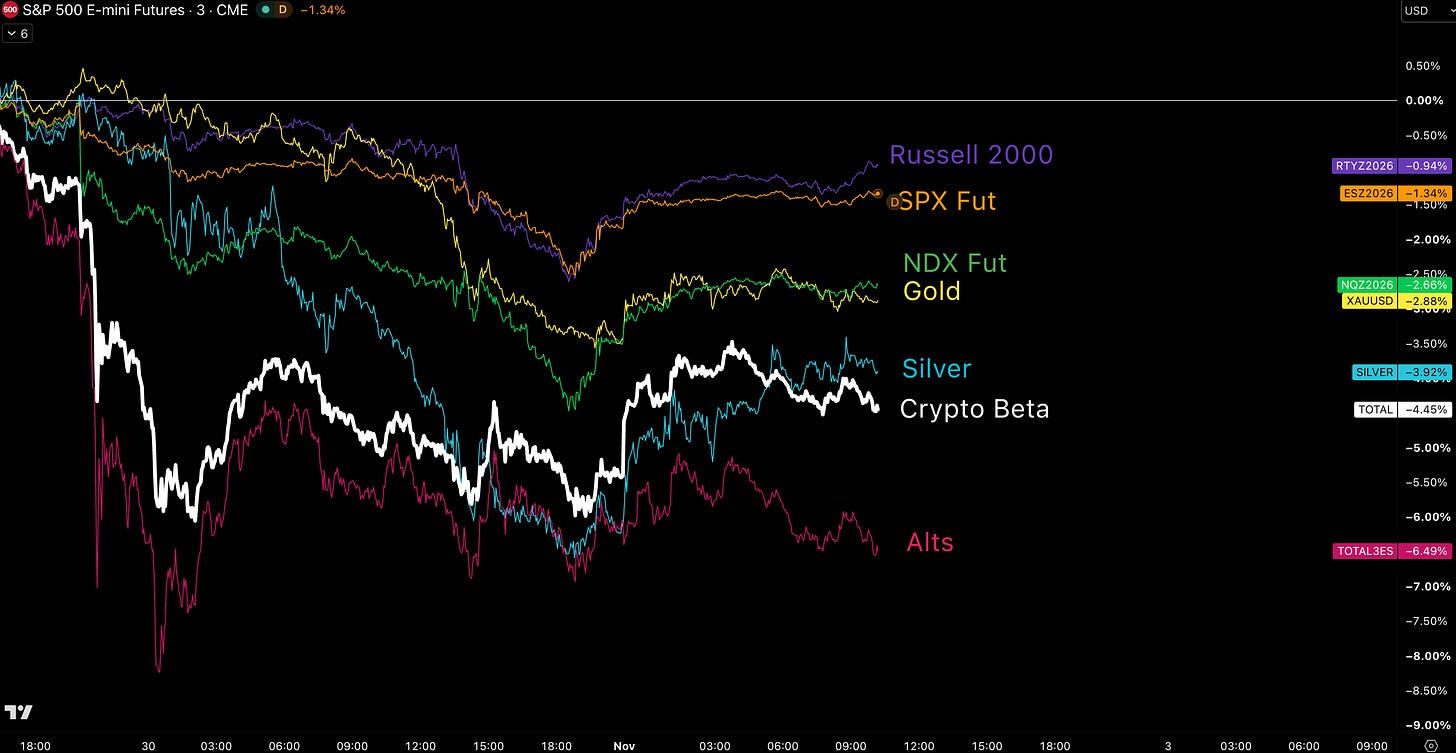
Cross-asset performance since the Binance exploit (%).
Since Friday’s bottom, the reverse dynamic can be seen with crypto leading the recovery, albeit in a measured way.
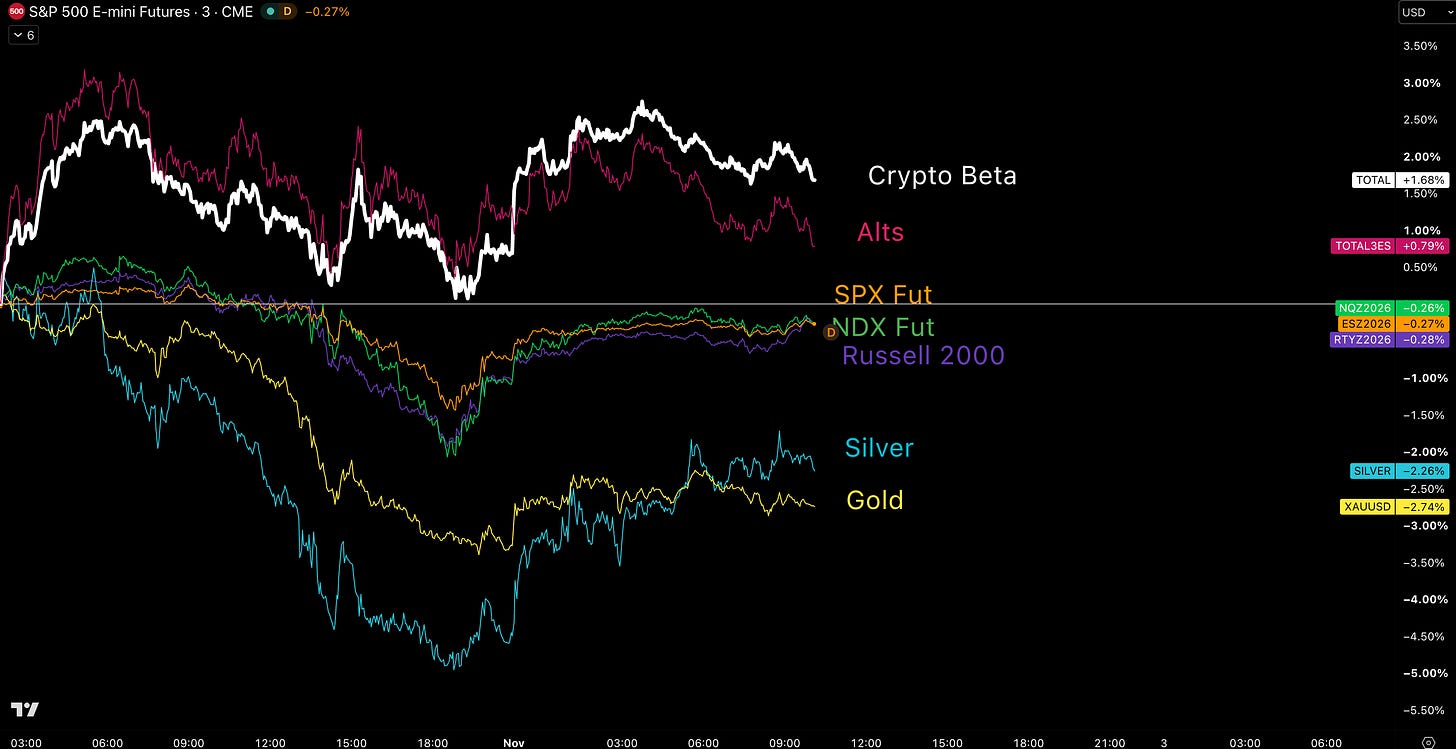
Cross-asset performance since Friday’s bottom.
The recovery has been so strong that even some of the hardest-hit assets, such as ETH, have rallied back into their normal trading pattern which is a rare outcome following a shock.
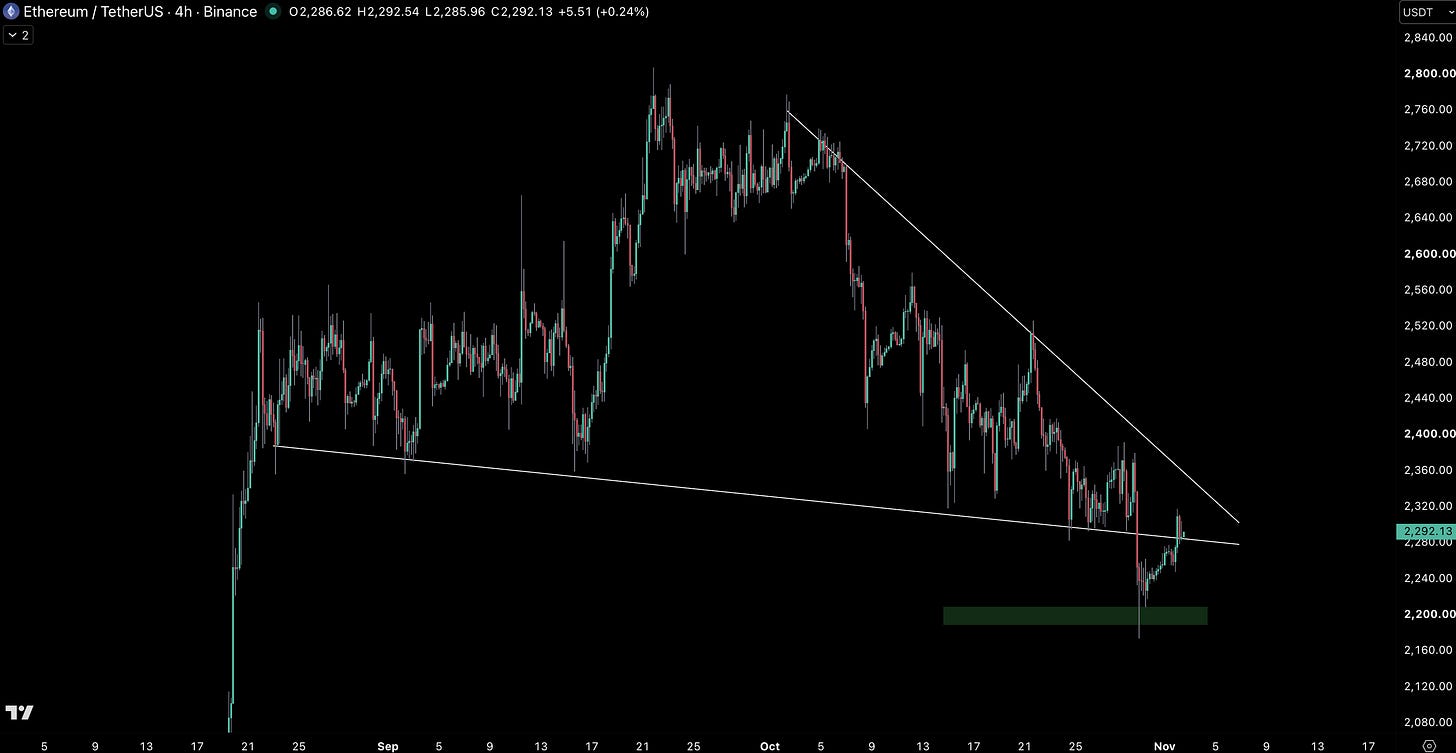
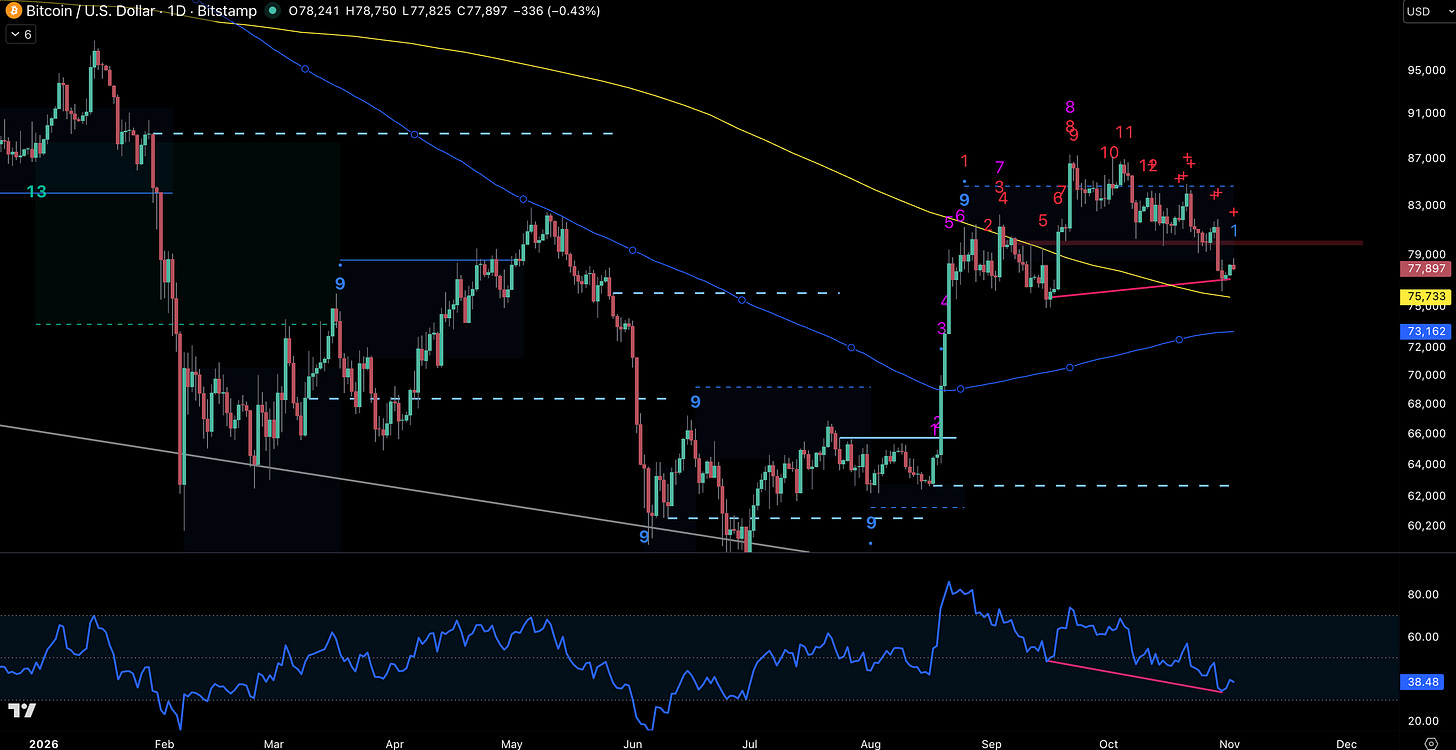
Bitcoin touched the 50W MA briefly where it saw strong bids after the market realised the event was relatively contained.
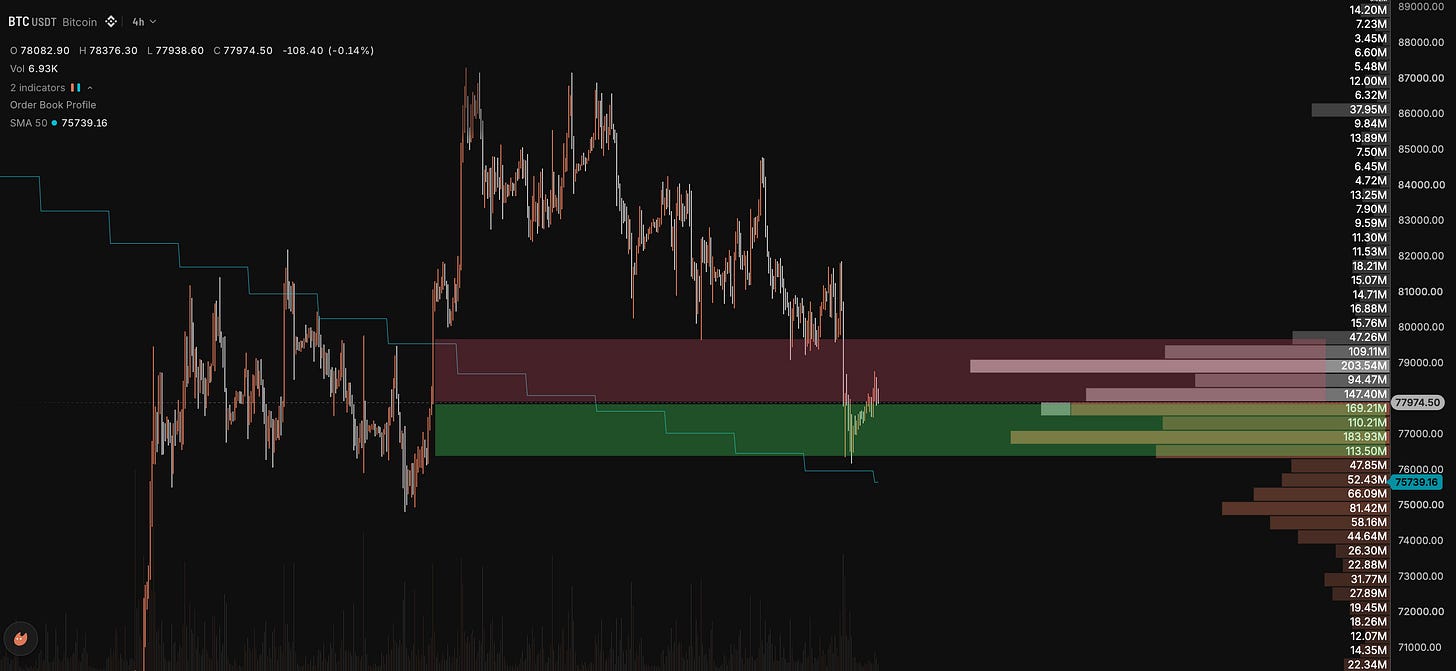
The $80k level (Sep resistance/Oct support) will likely act as key resistance, likely leaving BTC to trade between these two levels until a resolution emerges.
We can see this in the order book profile where equal bid/ask stacks are placed around these levels…
The backing and filling dynamic also makes sense given the US midterms tomorrow, 3 November 2026. The market is unlikely to move with high conviction in the short-term.
Crypto Fear & Greed sentiment has fully reset, mirroring the previous cycle when sentiment fell back towards neutral following the first break above the 50-week MA.
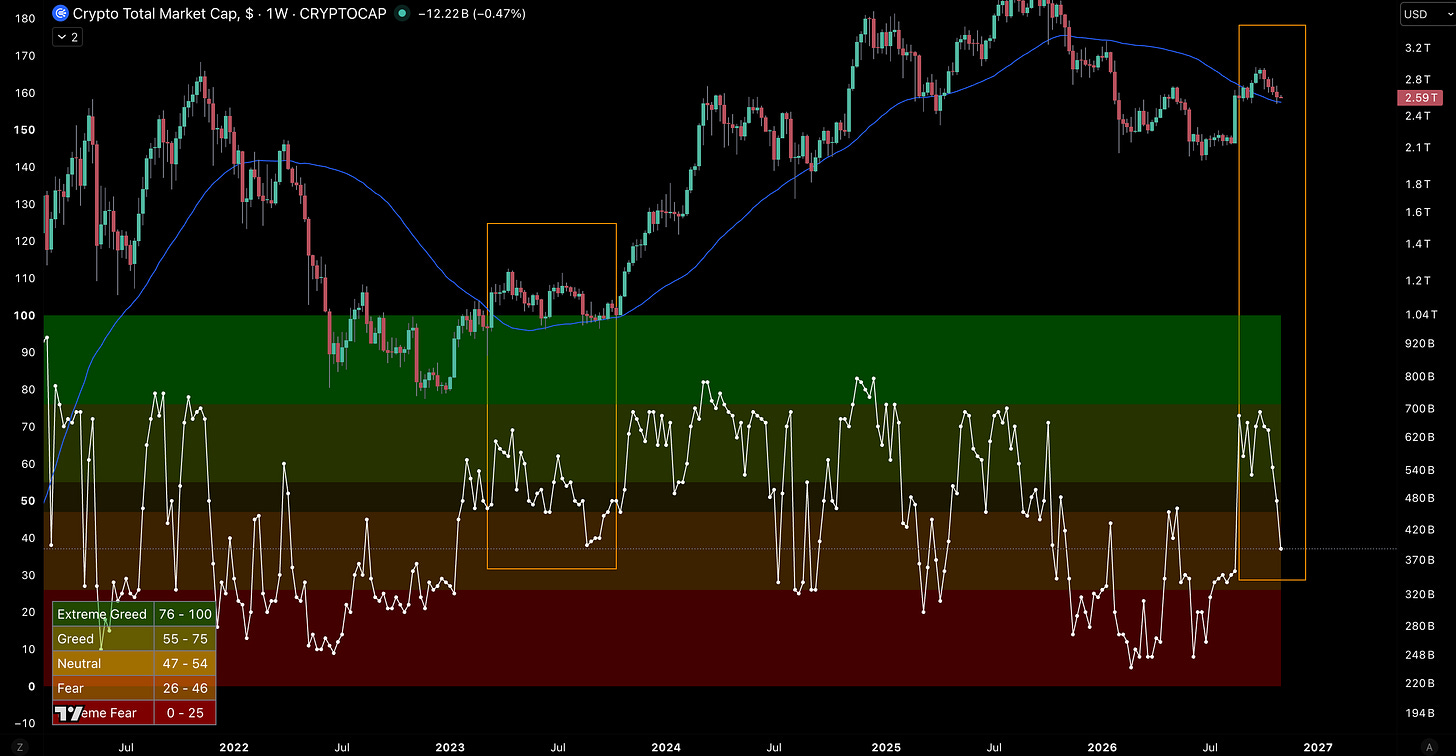
This is consistent with historical market dynamics, with the surprise increasingly appearing to be to the upside rather than the downside.
Yet, alts vs. BTC looks business as usual when you zoom out.
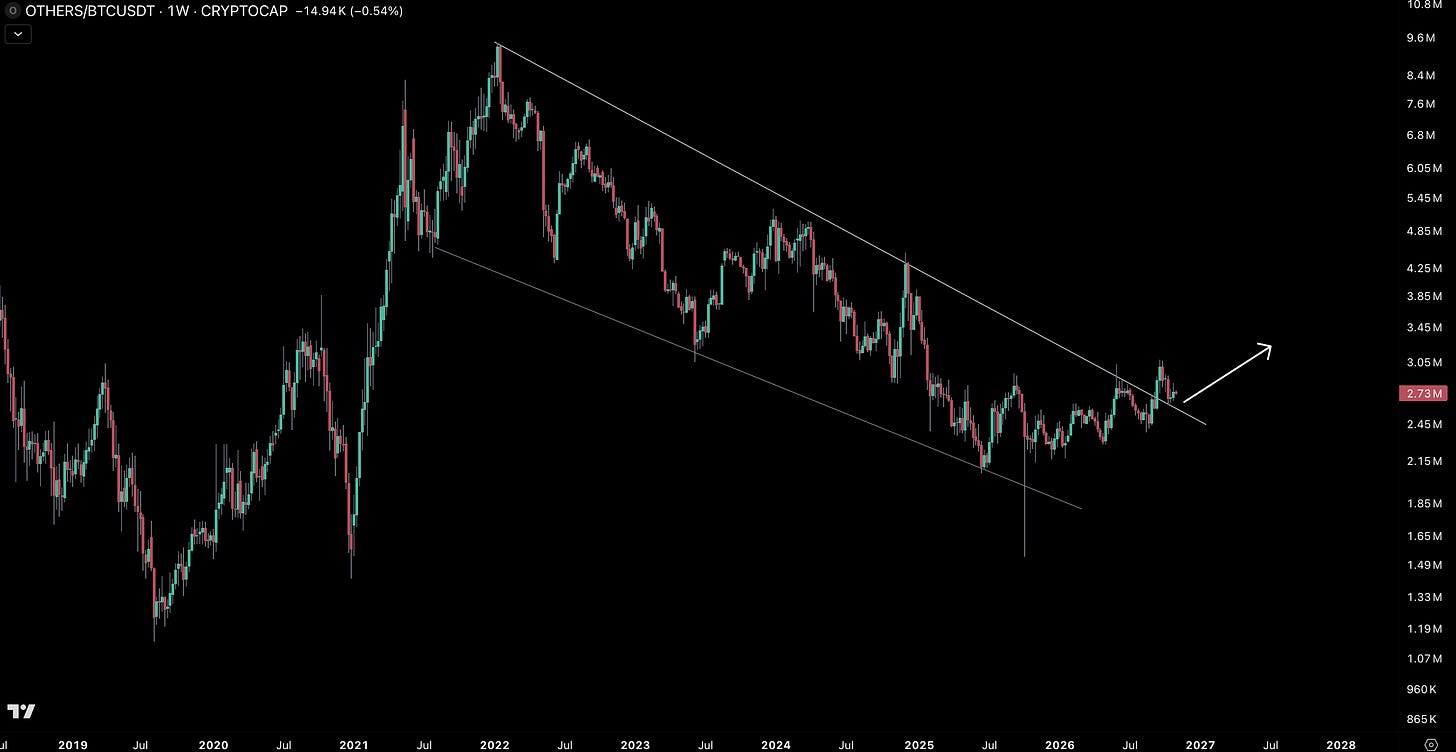
Meanwhile, TradFi’s embrace of blockchain infrastructure continues, underscored by Druckenmiller’s latest bet on Hyperliquid’s ecosystem.
Risk-On Positioning Over Mid-Terms?
At the same time, we see little reason to conclude that the US AI trade, a key driver of broader risk appetite that can funnel into crypto markets, has run its course.
Until the underlying technicals suggest otherwise, we remain constructive on the broader market outlook.
Hedge funds have undergone their largest de-risking in a decade. Historically, similar episodes have coincided with market bottoms, not tops.
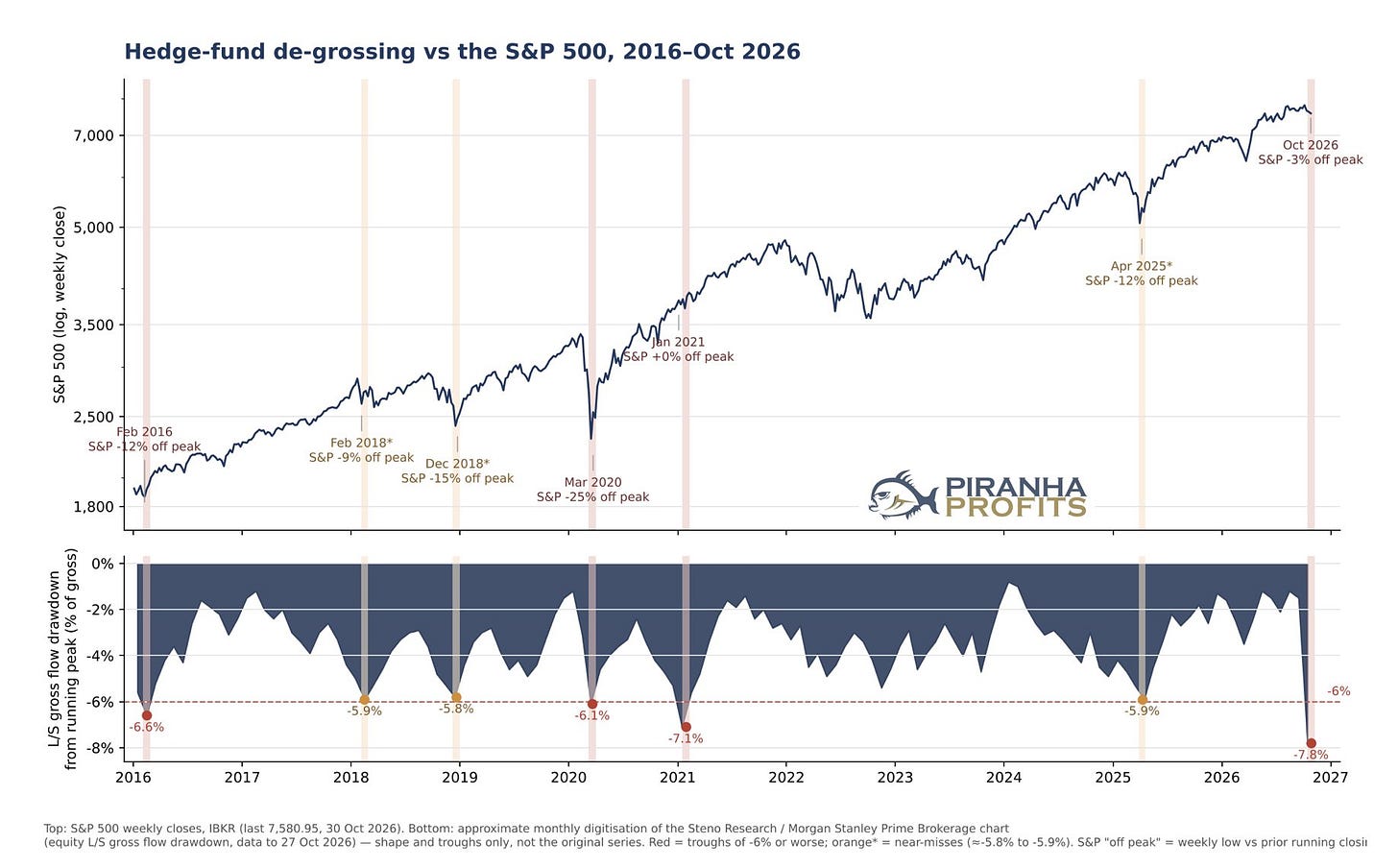
This suggests recent weakness has been driven more by positioning than fundamentals, leaving scope for renewed buying as exposures recover.
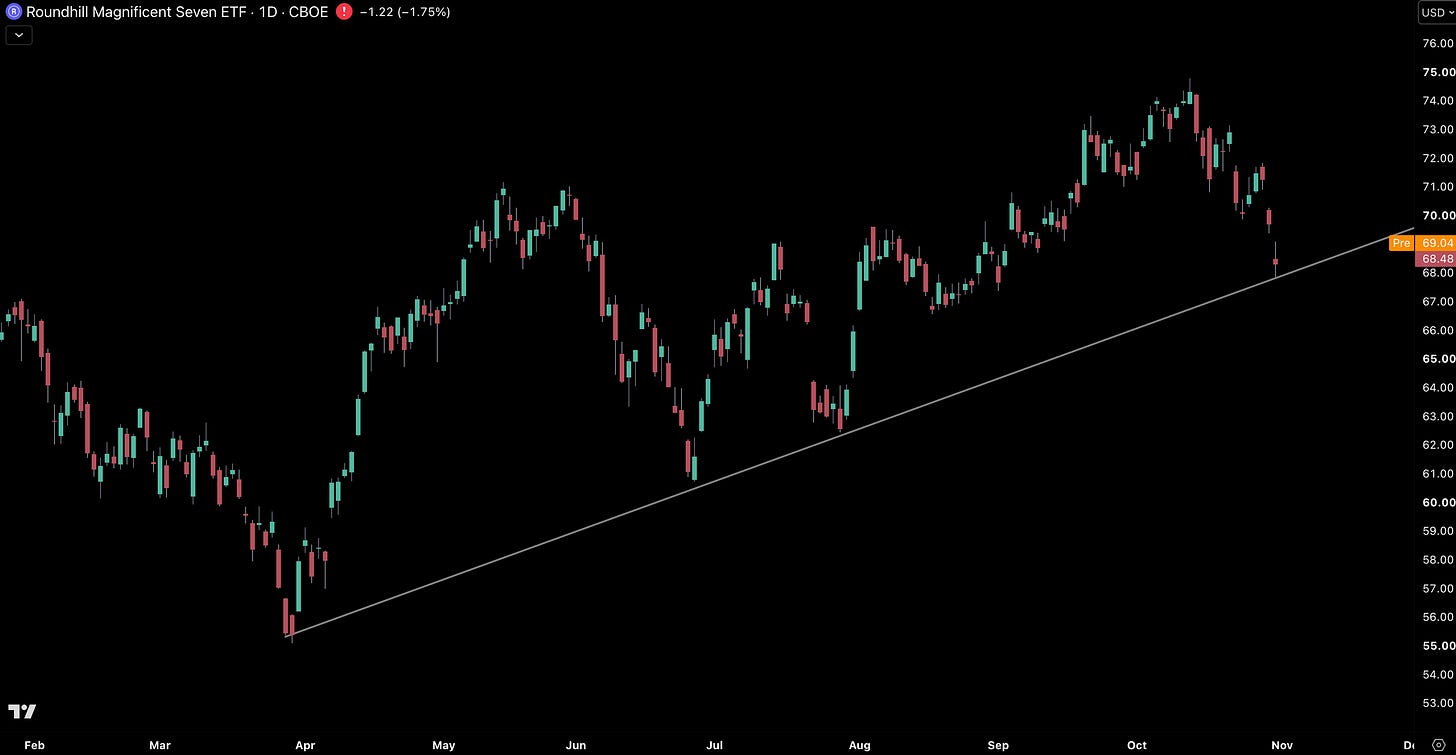
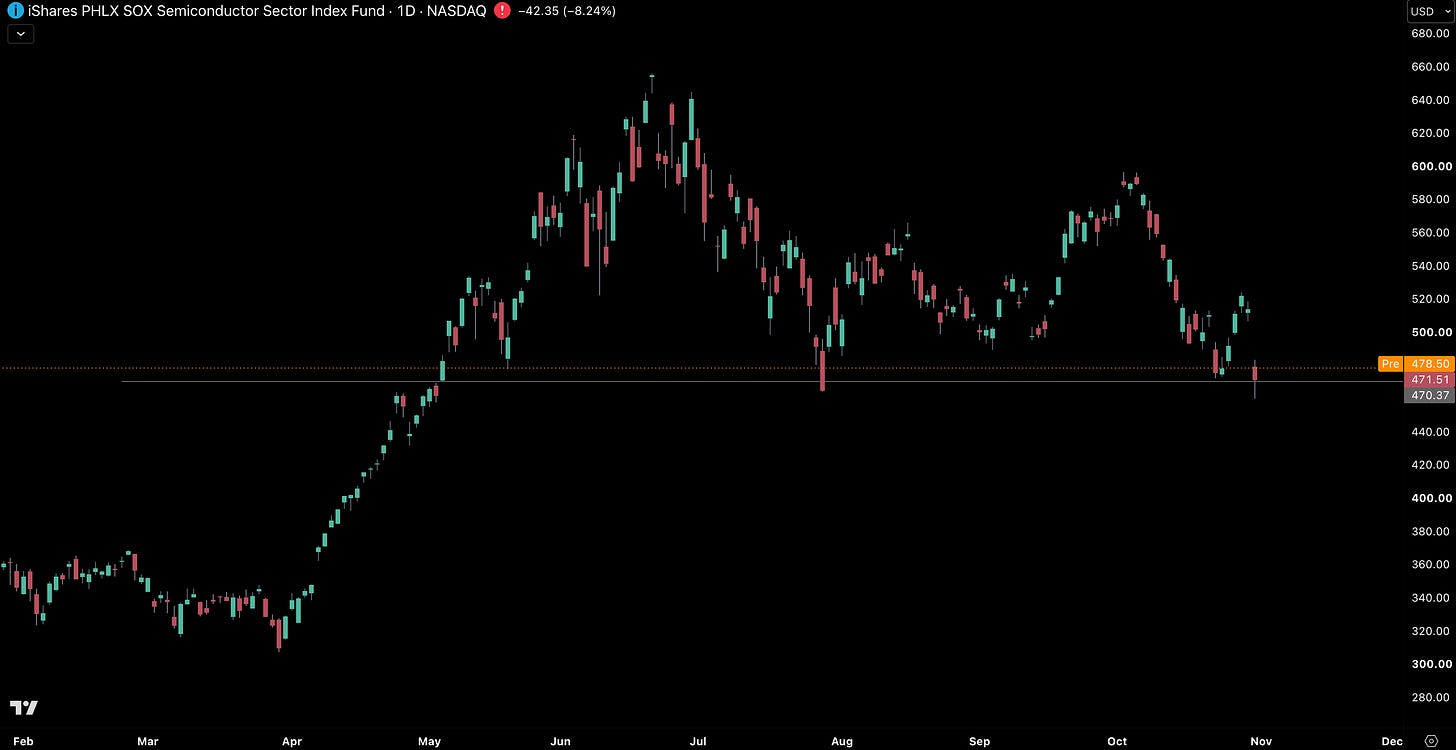
We see the same pattern across all key markets:
Mag7 fell to multi-month support…
Semis couldn’t undercut the summer lows…
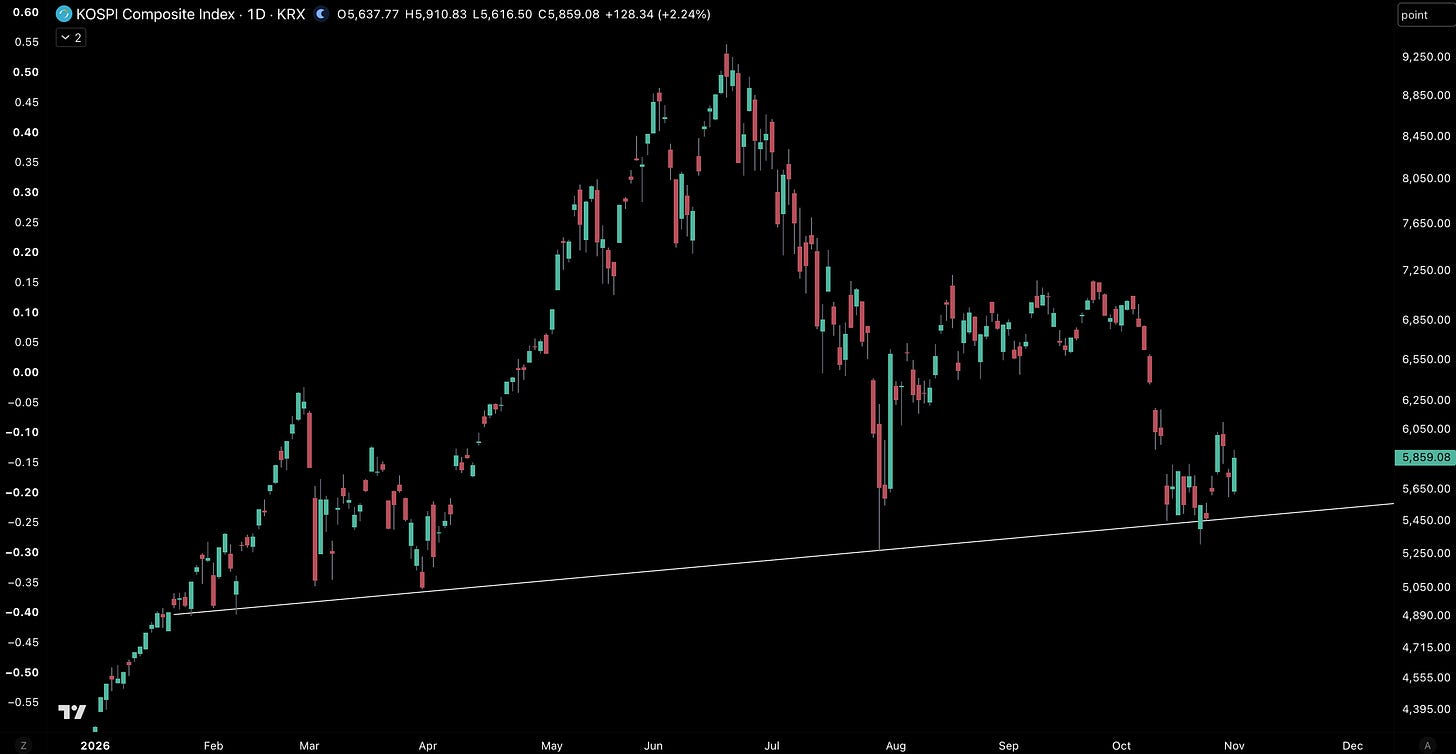
Korean KOSPI bounced off key levels…
Meanwhile, US 10-year yields have fallen 45bps from their peak after we called the top in October.
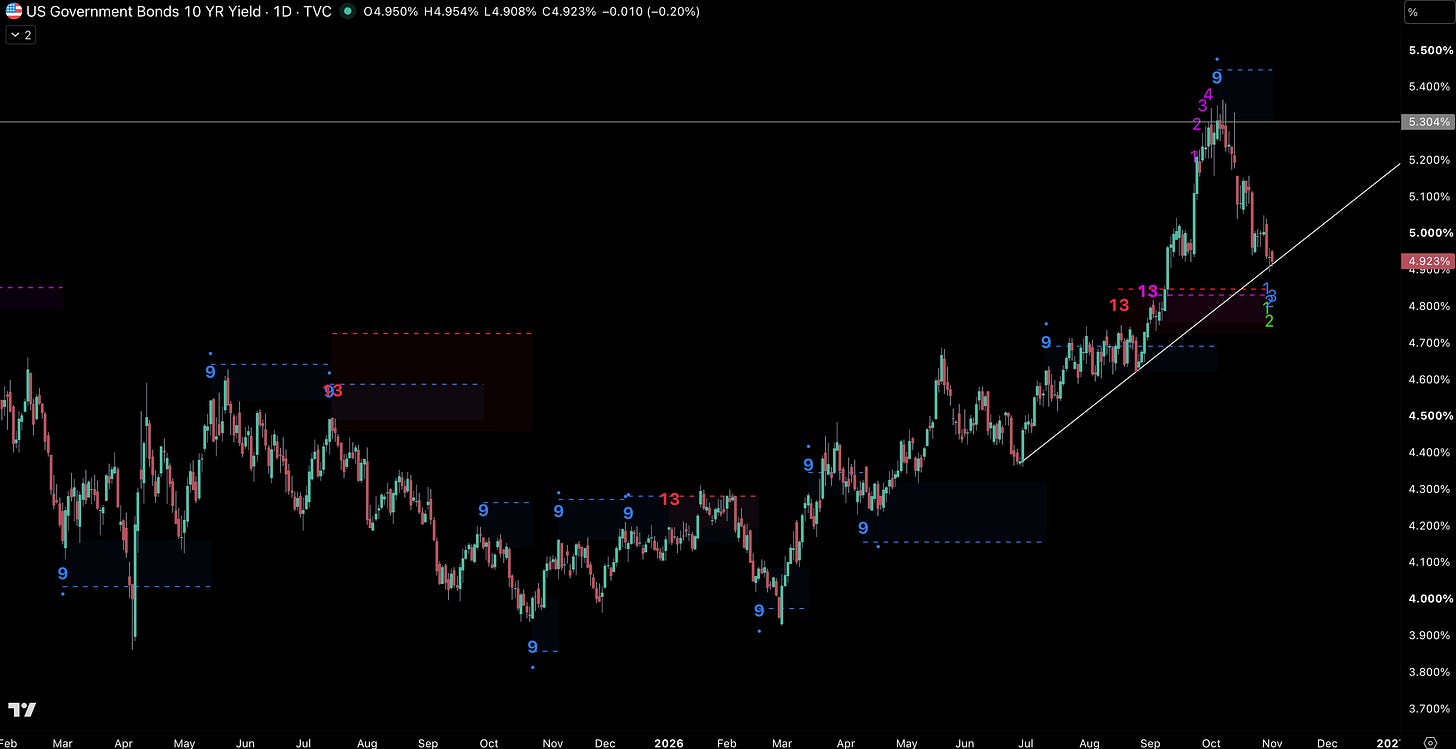
This marks a shift from recent months, when tech strength typically coincided with rising yields, while concerns over the AI trade drove investors towards the safety of bonds.
Falling US 10-year yields alongside rallying tech could be an early signal of easing inflation pressures supporting valuations rather than reflecting growth concerns.
With the US midterms tomorrow, the election could act as a clearing event, removing a key source of uncertainty and allowing improving market conditions and reduced positioning to translate into renewed risk appetite.
State of Yields
Yields have expanded slightly across the board in light of recent market volatility:
Stablecoin lending yields:
~3.87% on Aave (USDC) — 1 bps higher than last week.
~4.66% on Aave (USDe) — 30 bps lower than last week.
~5.16% on Maple (syrupUSDC) — 2 bps lower than last week.
Fixed-rate DeFi lending: yield premium in fixed markets:
Pendle sUSDAi: ~10.29% (Oct 2026 – Feb 2027 maturities).
sUSDe: ~4.78% —15 bps lower than last week.
ETH yield benchmarks:
Lido staking: ~2.72% — 50 bps higher than last week.
About Re7
Re7 Capital is a research-driven digital asset investment firm specialising in DeFi yield and liquid alpha strategies.
Re7 Labs is an on-chain asset management and risk curation firm bringing institutional-grade rigour to DeFi.
Disclaimers
The content is for informational purposes only. None of the content is meant to be investment advice. Use your own discretion and independent decision regarding investments. The opinions expressed in all Re7 public research articles are the independent opinions of the authors at the time of publication and not the opinions of the affiliates of Re7.
Please see here for full disclaimers.